


 BACK TO LIVE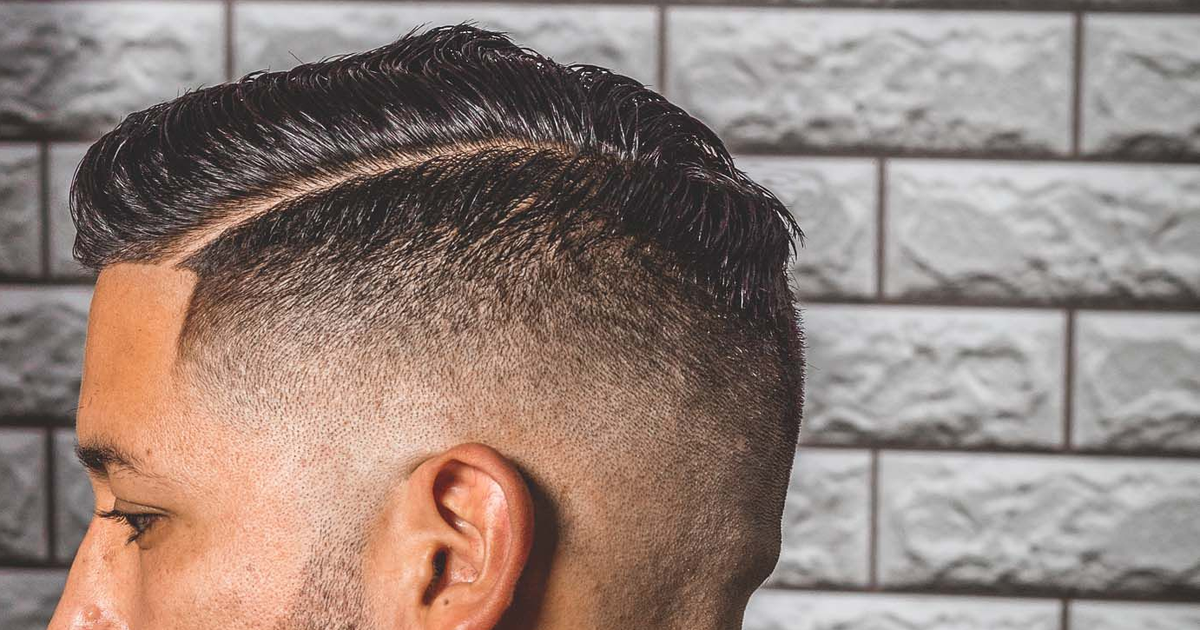
Standing in front of the mirror and asking for a fade vs taper haircut can feel confusing when both sound similar. The fade vs taper haircut debate matters because each cut changes how sharp, bold or classic you look, especially at work. This guide explains what fades, tapers and undercuts actually are, how they compare side by side, which suits your face shape and hair type, and which feels right for your office. You will also learn simple ways to keep your cut looking fresh between appointments.
Key Takeaways
- A fade blends hair down very close to the skin, while a taper keeps more length and creates a softer, more classic finish.
- A low fade haircut or a traditional taper usually works best in formal offices, while higher fades and undercuts suit relaxed or creative workplaces.
- Your face shape, hair density and how often you can visit the salon should guide your final choice.
Fade, Taper and Undercut: What Each Cut Means
These three terms are often used interchangeably, but they describe different techniques. Understanding the difference helps you explain what you want clearly, so your stylist creates the look you imagine rather than something close but not quite right. Once you know the language, choosing becomes much easier and far less stressful.
A fade uses a graduated clipper technique that takes the sides and back down very short, often close to the skin, before blending seamlessly into longer hair on top. The point where the blend starts can sit low, mid or high on the head. A taper is more conservative. Hair still gets shorter towards the neckline and around the ears, but it keeps visible length and finishes with a natural edge rather than bare skin. An undercut is different again. The sides are cut short in one length with no gradual blend, creating a strong contrast with the longer top, a look that has a surprisingly long history in men’s styling.
Because these names are used loosely, it helps to describe the result you want rather than relying on a single word. Tell your stylist how short you want the sides, whether you want skin showing at the lowest point, and how sharply the sides should contrast with the top. Reference photos taken from the side and back make these conversations far easier and remove any risk of misunderstanding before the clippers start.
Comparing the Cuts Side by Side
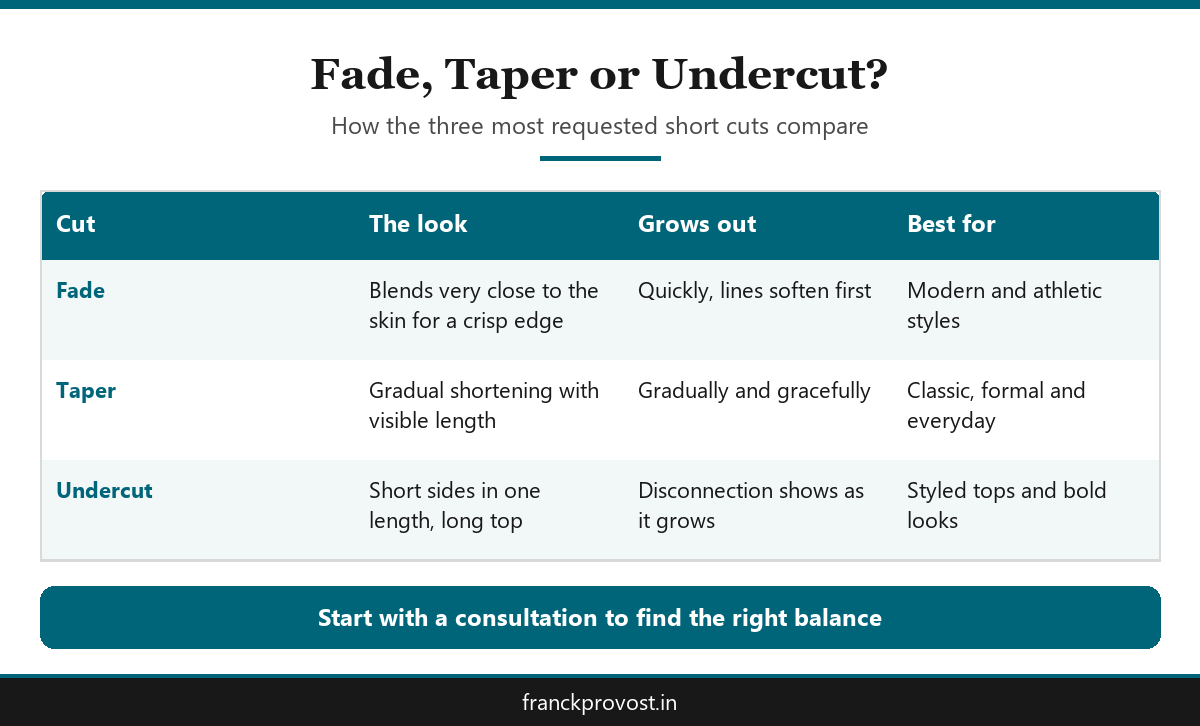
Seeing the cuts compared directly makes the choice clearer. Each style has its own strengths in terms of sharpness, versatility and upkeep, and the right option depends on how bold you want to look and how much time you can spend maintaining your hair each month. A quick comparison saves guesswork in the chair.
Fades deliver the crispest finish and look impressively clean in photographs, but they grow out quickly because the shortest areas show regrowth first. Tapers are the most forgiving. They grow out gradually, suit almost every age group and rarely look out of place, which is why taper haircut men in traditional roles often prefer this option. Undercuts create the most dramatic contrast and allow plenty of styling freedom on top, although the disconnected line becomes noticeable as the sides grow.
When comparing a fade vs taper haircut, think about the overall impression you want to create. Choose a fade for a modern, athletic edge. Choose a taper for timeless polish with minimal fuss. Choose an undercut when you want longer hair on top that you can style in different ways. Whichever direction you lean towards, remember that the blend itself is where skill shows. An expert stylist creates a smooth gradient with no harsh steps, and that precision is what separates a premium cut from a rushed one.
Matching the Cut to Your Face Shape and Hair Type
A cut that looks brilliant on a friend may not flatter you. Face shape, head shape, hair density and texture all influence how a fade, taper or undercut sits, so a consultation with an experienced stylist is the smartest starting point before choosing any short style. Small adjustments make a big difference to the final result.
Round faces often benefit from a mid or high fade paired with height on top, which adds length and definition. Longer or oval faces usually suit a low fade haircut or a taper, because keeping some fullness at the sides balances proportions. Square jaws carry almost any option confidently. Hair texture matters too. Thick, dense Indian hair can look bulky if the sides are left too long, so a well blended fade or taper removes weight neatly. Curly and wavy hair suits tapers beautifully, letting texture show while edges stay tidy. Before you book, explore the men’s cutting and styling services and bring photos of looks you like.
Your stylist will also check for cowlicks, scars or thinner areas. These details can decide how short the sides should go and where the blend should begin.
Choosing an Office Appropriate Cut
Your workplace plays a big role in which style feels right. Corporate offices, client facing roles and creative studios all have different expectations, and the best cut is one that looks professional on Monday morning yet still reflects your personal style at the weekend. Your role, clients and company culture all count.
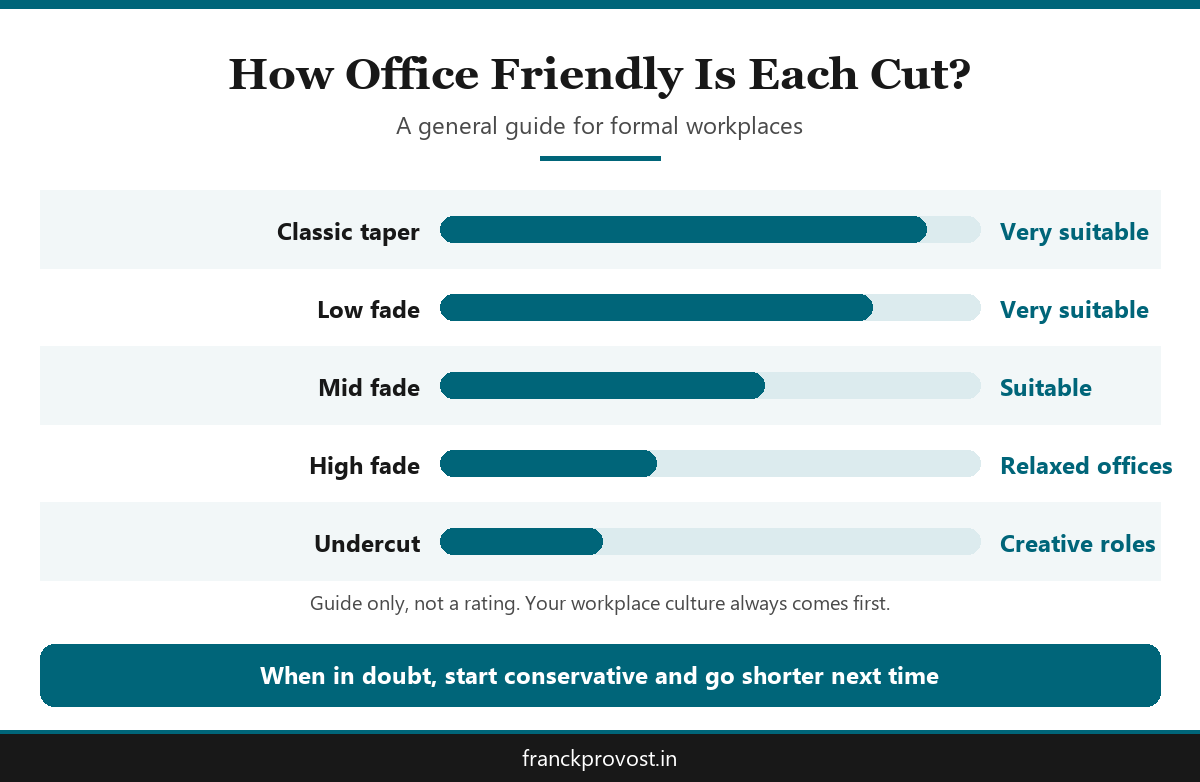
For formal environments such as banking, law or consulting, a classic taper or a subtle low fade looks polished without drawing attention. Keep the top neat and avoid extreme contrast. Tech companies and startups tend to be more relaxed, so a mid fade with a textured crop feels modern while remaining smart. Creative industries usually welcome bolder choices, including high fades and undercuts with longer styled tops. If your role involves frequent client meetings, remember that fades need more regular tidying to stay crisp. Many professionals searching for the best hair salons for guys near me want a stylist who understands these nuances, and our complete guide to men’s grooming explains how haircuts, beards and skin care work together.
When in doubt, start conservative. It is always easier to go shorter at your next appointment than to wait for hair to grow back. You can also ask your stylist for a version that adapts, such as a taper that can be styled neatly for weekdays and pushed into a more relaxed shape for weekends.
Keeping Your Cut Sharp Between Salon Visits
Short styles look their best when the lines stay clean. A little planning and a simple home routine help your fade, taper or undercut keep its shape for longer, so you look consistently groomed rather than sharp for a few days and untidy for the rest of the month. Consistency is the real secret.
Fades usually need the most frequent visits because regrowth shows quickly on very short sides, while tapers can go a little longer between appointments. This advice on how often you should get a haircut is a helpful guide, but your stylist can set a personal schedule based on your growth rate. At home, use a light matte product for texture, wash out styling products daily and resist trimming the neckline yourself, since uneven edges are hard to fix. If you also wear a beard, ask for it to be blended into your haircut at the same visit. Choosing the best salon for men near me that remembers your preferences makes every refresh faster and more consistent. When you are ready, reserve a consultation online and let an experienced stylist guide your decision.
Conclusion
Choosing between a fade vs taper haircut becomes simple once you understand how each cut looks, grows and suits different settings. Fades offer a modern, crisp edge, tapers deliver timeless polish and undercuts bring bold contrast. Match your choice to your face shape, hair texture and workplace, then maintain it with regular appointments and a light home routine. Visit a Franck Provost salon in Bengaluru or Thrissur for a consultation led cut that looks sharp at the office and effortless at the weekend.
Frequently Asked Questions
What is the main difference in a fade vs taper haircut?
A fade takes the sides and back down very close to the skin with a seamless blend, while a taper keeps more visible length and finishes naturally. Fades look bolder, whereas tapers feel softer and more classic.
Is a low fade suitable for a corporate office?
Yes. A low fade keeps the shortest area near the neckline and ears, so it looks neat and professional without dramatic contrast. Pair it with a tidy top for a polished appearance in formal workplaces and meetings.
Does a taper grow out better than a fade?
Generally yes. Because a taper keeps more length at the sides, regrowth appears gradually and the cut stays presentable for longer. Fades show regrowth sooner, so they need more regular tidying to stay looking sharp.
Can men with curly hair get a fade or taper?
Absolutely. Curly and wavy hair works especially well with tapers, which keep edges neat while letting natural texture show. A well blended fade also suits curls when the stylist cuts with the curl pattern carefully.
What is the difference between an undercut and a fade?
An undercut uses one short length on the sides with no gradual blend, creating a sharp disconnection from the longer top. A fade graduates smoothly from very short to longer hair without any visible line.
Which cut suits a round face best?
A mid or high fade with extra height on top usually flatters round faces because it adds length and definition. Your stylist will still check head shape and hair density before recommending the most balanced option for you.
Where can I get a fade or taper at Franck Provost?
Men’s cuts are available at Franck Provost salons in Indiranagar, HSR Layout, Whitefield and Thrissur. See all Franck Provost salon locations to find the address, phone number and opening details for your nearest salon before booking.
Should I trim my neckline at home between visits?
It is best to avoid it. Small mistakes around the neckline and ears are easy to make and hard to correct. Book a quick tidy up instead, so your stylist maintains clean, even lines and a balanced shape.
How do I explain the cut I want to my stylist?
Bring photos from the front, side and back, and describe where you want the shortest point to begin. You can also contact the salon team beforehand to discuss your preferred style and book a suitable appointment.