


 BACK TO LIVE
Choosing a haircut according to face shape sounds simple, yet many people leave a salon with a cut that looked perfect in a photo but not on them. The missing step is usually a proper consultation. In this guide, you will see how a Franck Provost stylist reads your features, why hair texture and lifestyle matter as much as the outline of your face, and which cuts tend to flatter each common face shape. You will also learn what to tell your stylist so your next haircut feels made for you.
Key Takeaways
- Face shape guides a cut, but hair texture, density, hairline and daily routine decide what will actually work for you.
- A good consultation looks at your forehead, cheekbones and jawline together, then balances proportions with length, volume and layers.
- Bring reference photos and be honest about styling time, so your stylist can adapt a flattering shape to your real life.
Why Face Shape Is Only the Starting Point
Face shape is a useful guide because a good cut balances your proportions. Yet two people with the same outline can need very different haircuts. Hair texture, growth patterns and how much time you spend styling all change what looks effortless and flattering on you every single day, in every season.
Most face shape charts sort people into groups such as oval, round, square, heart, long and diamond. These widely used face shape categories are a sensible place to start, but they rarely tell the whole story. Thick, wavy hair behaves very differently from fine, straight hair, even on an identical face. A strong cowlick, a high hairline or a double crown can make a textbook recommendation almost impossible to style at home. A skilled stylist notices these details early and works with them rather than against them.
Your lifestyle matters too. A cut that needs daily blow drying may not suit someone who washes and goes before an early commute. That is why, when you search for the best hairdresser near me, it pays to look for a stylist who asks questions before picking up the scissors. At Franck Provost, every cut begins with a consultation, reflecting the brand belief that each client is unique and deserves a tailored result rather than a trend copied from a screen.
How a Stylist Reads Your Face in a Consultation
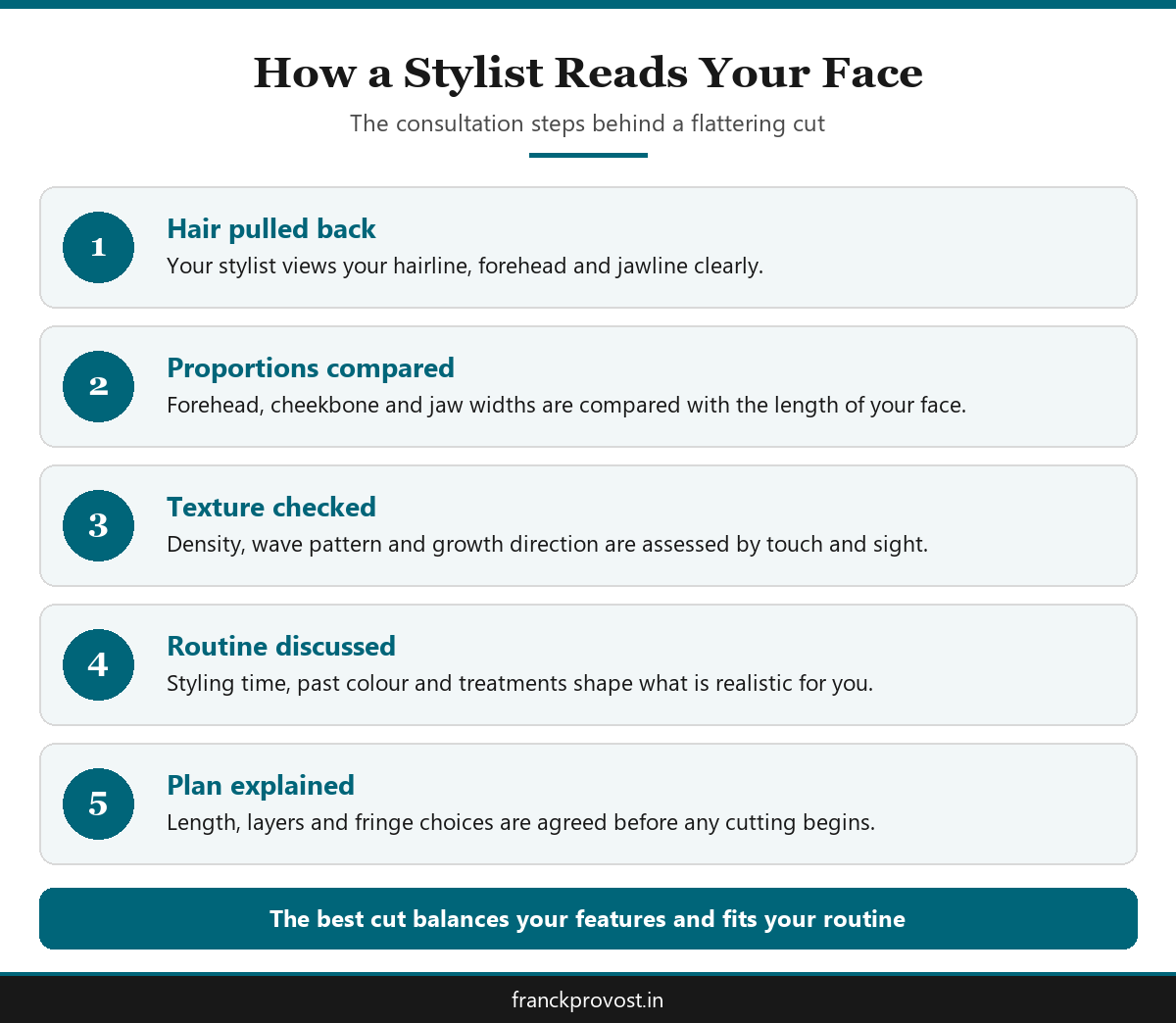
A skilled stylist studies your face the way an artist studies proportion. They look at the width of your forehead, cheekbones and jaw, the length of your face and the angles of your features, then decide where a cut should add or remove visual weight to create a beautifully balanced look.
The consultation usually starts with your hair pulled back, so your stylist can see your hairline and jaw clearly. They compare the widest and narrowest points of your face, notice whether your jaw is soft or angular, and check where your cheekbones sit. Next, they feel your hair to judge density, texture and elasticity, and watch how it falls naturally without any styling.
Expect questions about your routine, past colour and treatments such as keratin or smoothening, because these change how hair responds to a cut. Finally, your stylist explains the plan: where the length will sit, whether layers or a fringe will help, and how the shape will grow out over the coming weeks. This is the level of care worth expecting from any top rated hair stylist near me, and it is standard practice at Franck Provost salons. If anything feels unclear, ask your stylist to show you where the cut will fall before they begin.
Flattering Cuts for Common Face Shapes
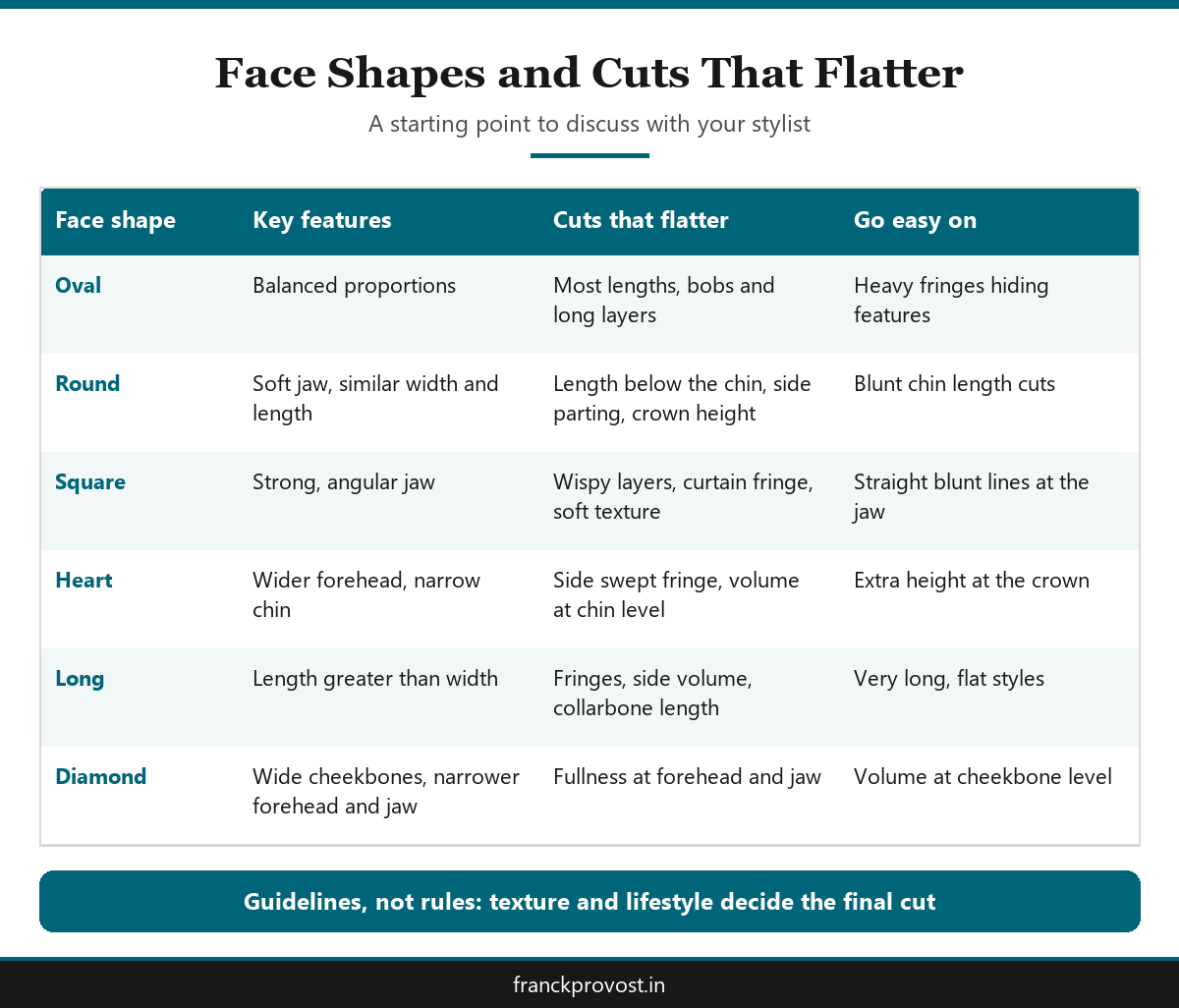
Once your stylist understands your proportions, they can suggest shapes that create balance. These pairings are guidelines rather than strict rules, but they explain why certain lengths, layers and fringes flatter some faces more than others, and they help you have a more confident and useful conversation in the chair.
Oval faces are naturally balanced, so most lengths work, from a sleek classic bob to long layers. Round faces often benefit from length below the chin, soft side partings and a little height at the crown, which lengthen the face visually. Square faces with a strong jaw are softened by wispy layers, curtain fringes and texture around the cheekbones. Heart shaped faces, wider at the forehead, suit side swept fringes and volume at chin level.
Long faces look balanced with fringes, width at the sides and cuts that end around the collarbone. Diamond faces with prominent cheekbones suit styles that add fullness at the forehead and jaw. For men, the same logic applies: a round face may suit tapered sides with height on top, while a longer face suits sides kept slightly fuller. For extra inspiration to discuss with your stylist, explore the signature Paris collection looks created by Franck Provost. Remember that a style seen on a model can be adapted in length or texture so it flatters your own face.
Why Indian Hair Texture and Lifestyle Change the Answer
Many face shape guides are written with fine, straight hair in mind. Indian hair is often thicker, denser and naturally wavy, and Bengaluru weather adds humidity to the mix. A stylist who understands these realities adapts classic recommendations so your cut sits well from morning until evening, through busy days.
Dense hair can add unwanted width when it is cut into a blunt shape, so stylists often remove bulk from inside the haircut while keeping the outline soft. Natural waves may shrink as they dry, which means a fringe needs to be cut carefully so it does not sit shorter than planned. Monsoon humidity can turn a sleek shape frizzy, so the right finishing products and styling advice matter just as much as the cut itself.
Everyday habits count too. Regular oiling, wearing a helmet on a two wheeler, or tying hair back for work or the gym all influence the most practical length. For men, beard shape, hairline and grooming routine are part of the same picture, as explained in this guide to premium cuts and beard grooming for men. When these details are considered together, a haircut according to face shape becomes practical rather than theoretical.
What to Tell Your Stylist Before the First Snip
The more your stylist knows, the better your result. A few honest details about your hair history, styling habits and goals help turn general face shape advice into a personalised cut that you can recreate at home without struggling every morning or rushing back to the salon within a few weeks.
Bring two or three photos of cuts you like, plus one of a look you would never want. Mention how you usually wear your hair, how long you spend styling and whether you prefer a wash and go shape. Share any recent colour, keratin or smoothening, because treated hair can behave differently once cut. Be specific about length. Say where you want it to sit, for example at the chin or just below the shoulders, rather than asking for a small trim.
If you are looking for the best salon near me for haircut appointments that start with this kind of conversation, explore the haircut and styling services at Franck Provost and ask for a consultation when you book. For more ideas before your visit, browse these trendy cuts popular across Bangalore and save the ones that catch your eye. A clear brief makes your consultation faster and far more productive.
Conclusion
Choosing a haircut according to face shape works best as a conversation, not a chart. Your stylist balances your proportions with hair texture, density, lifestyle and the way Bengaluru weather treats your hair, then shapes a cut you can actually live with. Bring reference photos, share your routine honestly and ask why each choice suits you. Ready for a cut designed around your features? Book a consultation online and let a Franck Provost stylist tailor your next look to suit you perfectly.
Frequently Asked Questions
How do I choose a haircut according to face shape?
Start by identifying the widest and narrowest points of your face, then choose cuts that create balance. A stylist consultation is the most reliable approach, because it also considers texture, density, hairline and your daily styling routine.
How can I tell what face shape I have?
Pull your hair back and look straight into a mirror. Compare the width of your forehead, cheekbones and jaw with the length of your face. A stylist can confirm your shape quickly during a consultation.
Which haircut suits a round face?
Round faces often suit length below the chin, soft layers, side partings and a little height at the crown. These choices create vertical lines that lengthen the face and prevent extra width around the cheeks.
What haircut suits a square face?
Square faces are softened by wispy layers, curtain fringes and texture around the cheekbones and jaw. Very blunt lines that end exactly at the jawline can emphasise angles, so stylists usually add gentle movement instead.
Does hair texture matter more than face shape?
Both matter. Face shape suggests which proportions to balance, while texture decides how a cut will behave. Thick, wavy or curly hair needs different techniques from fine, straight hair, even when the recommended shape is similar.
Can men choose a haircut based on face shape?
Yes. Men with round faces often suit tapered sides with height on top, while longer faces suit slightly fuller sides. Beard shape, hairline and grooming habits also play a role in creating balance and structure.
Should I get a fringe for my face shape?
Fringes suit many long, heart shaped and square faces, but texture and cowlicks matter. Wavy hair can shrink as it dries, so a stylist should cut a fringe carefully and show you how to style it.
How often should I trim a face framing cut?
Shorter, structured cuts lose their shape faster than longer styles, so they usually need more frequent trims. This guide on how often to book a trim explains the factors that decide your ideal trimming schedule.
Where can I get a consultation led haircut?
Every Franck Provost cut begins with a consultation. Visit one of the Franck Provost salons in Bengaluru and Thrissur and ask your stylist to explain which shape suits your features, hair texture and daily routine best.