


 BACK TO LIVE
Growing your hair takes patience, so the thought of a long hair trim can feel nerve racking. Many people walk into a salon saying they want just a trim, then leave with far more length gone than they expected. The good news is that a skilled stylist can refresh your ends, remove damage and improve shape while protecting the length you love. In this guide, you will learn how much to cut, the difference between dusting, trimming and layering, and how to communicate clearly with your stylist.
Key Takeaways
- A long hair trim removes damaged ends and restores shape, and a skilled stylist can do this while keeping most of your hard earned length.
- Dusting, a classic trim and soft layers each remove different amounts of hair, so name the option you want and show your stylist exactly where to cut.
- Regular care between visits, including gentle detangling and heat protection, helps you stretch the time before your next split ends trim.
Why Long Hair Still Needs Regular Trims
It may seem strange to cut hair you are trying to grow, yet trimming is one of the best ways to keep long hair looking thick and healthy. The ends of long hair are the oldest part of each strand, so they carry the most wear from brushing, sun, heat and styling.
Over time, those ends can become dry and fragile. Once a strand begins to fray, the damage can travel upwards, which is why split ends often make hair look thinner and frizzier at the bottom. Cutting away that damage early stops it from spreading and keeps the ends looking full.
A regular trim for long hair also protects shape. Without maintenance, long hair can lose its line, become uneven or collapse into a heavy, flat silhouette. A light refresh restores movement and swing, so your hair looks intentional rather than simply grown out. For many people, the result is hair that actually appears longer and healthier, even though a little length has been removed.
Bengaluru and Kerala weather adds another reason to stay on top of trims. Humidity, sun and pollution can dry out lengths, while frequent washing and heat styling add further stress to already fragile ends.
Dusting, Trimming or Layering: Know the Difference
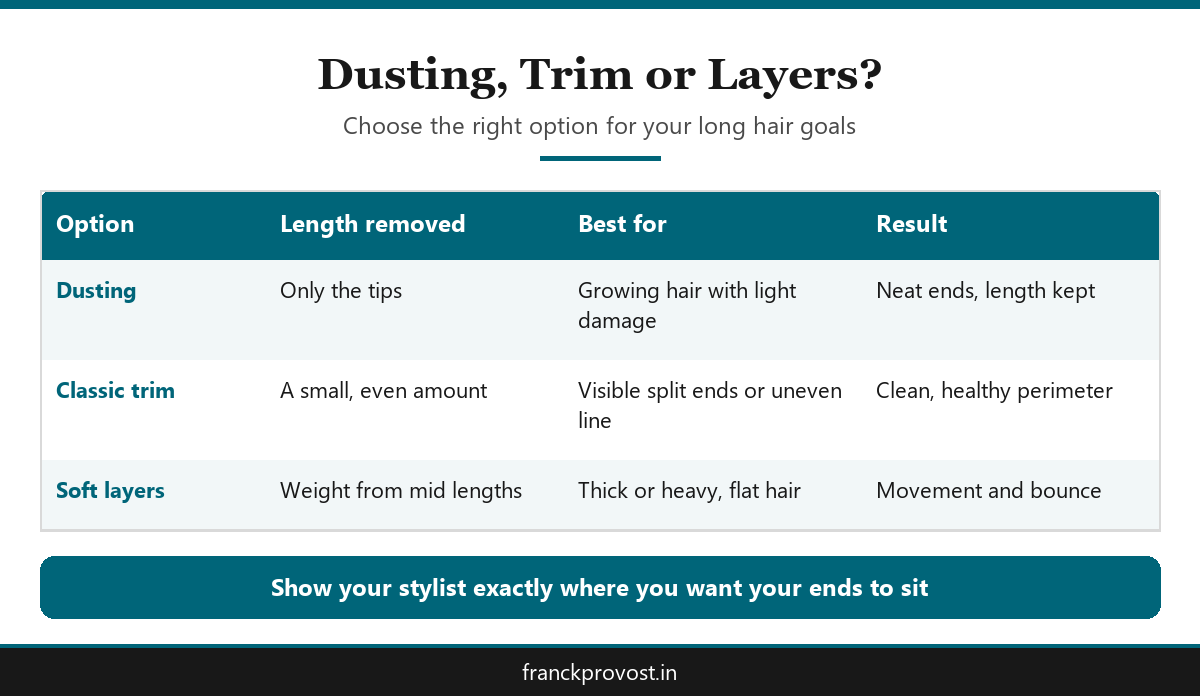
When you ask for just a trim, your stylist may interpret that in several ways. Understanding the three most common options helps you ask for exactly what you want, avoid misunderstandings and leave the salon with the length, shape and finish you had in mind before your appointment began that day.
Dusting is the most conservative option. The stylist removes only the very tips of damaged strands, often by twisting small sections and snipping the ends that stick out. Overall length stays almost the same, which makes dusting ideal if you are growing your hair and simply want to keep ends neat.
A classic trim removes a small, even amount from the bottom to create a clean, healthy line. It is the best choice when damage is visible across the ends or the shape has become uneven. Soft layers are different again. They remove weight and add movement through the lengths while keeping the perimeter long. Layers suit thick or heavy hair that feels flat, but they change the silhouette, so ask for them only if you want more bounce and body.
If you are unsure which option you need, ask your stylist to show you the damaged ends in the mirror before cutting. Seeing the difference yourself makes it much easier to agree on the right amount.
In most cases, a long hair trim for someone growing their hair will start with dusting or a very light classic trim. Layers are best saved for when you want to change how your hair moves, not simply maintain it.
Signs It Is Time for a Trim
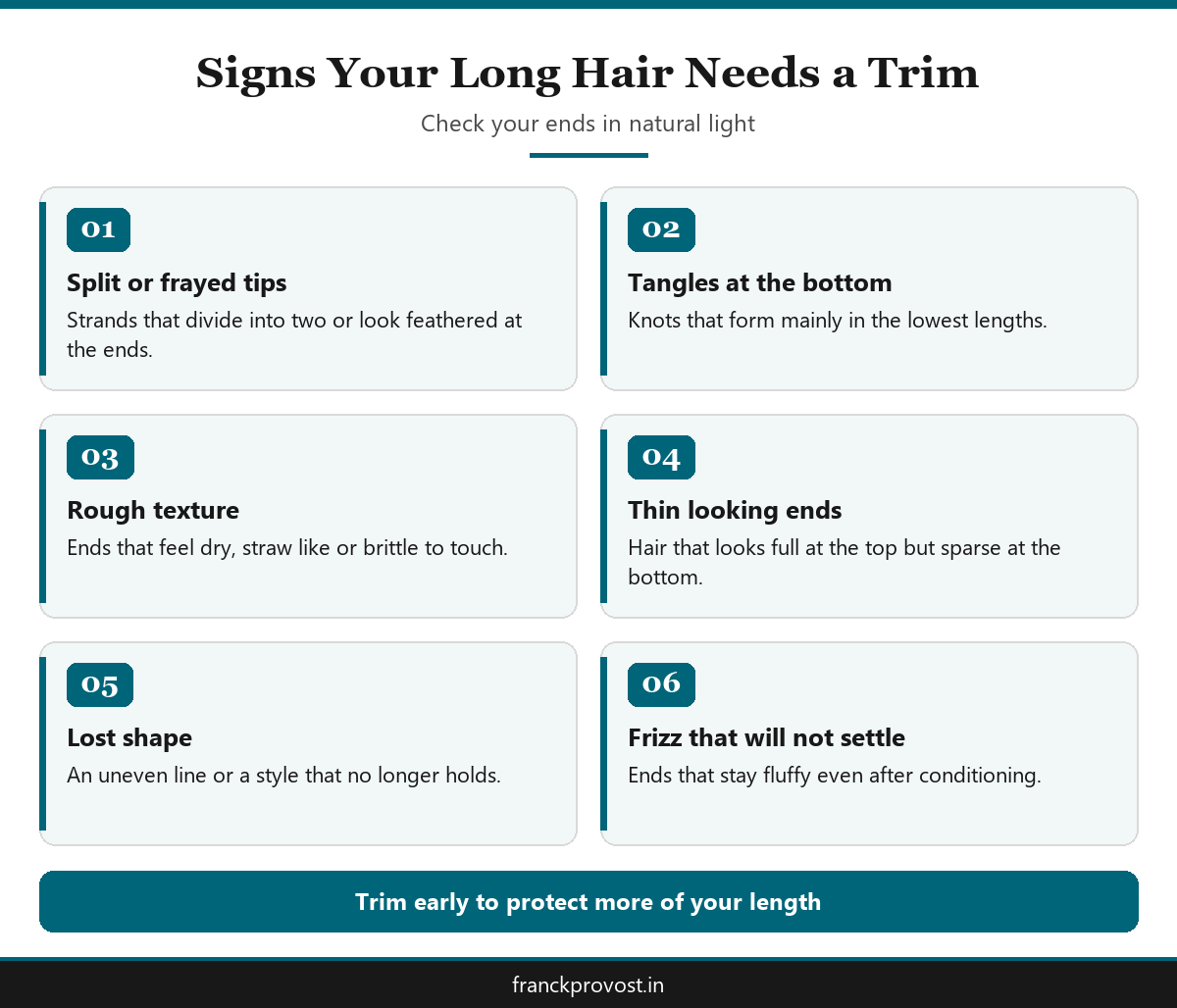
Your hair usually tells you when it needs attention. Instead of waiting for a fixed date, learn to spot the practical signs that your ends are ready for a refresh, so you can book at the right moment and avoid losing more of your length to spreading damage later on.
Look closely at the bottom few centimetres of your hair in natural light. White dots, frayed tips or strands that split into two are clear signs of damage. Other clues include tangles that form mainly at the ends, hair that feels rough or straw like below the shoulders, and styles that no longer hold their shape.
How often you need a cut depends on your hair condition, styling habits and goals. Some experts commonly suggest trimming every few months, depending on hair health, while hair that is coloured or heat styled often may need attention sooner. For a deeper look at timing, read this expert guide to haircut frequency before planning your next visit. Your stylist can then fine tune the schedule after seeing how your ends respond.
Booking a long hair trim at the first signs of damage usually means less needs to be cut, which is exactly how you protect your length over the long term.
How to Ask for a Trim Without Losing Length
Clear, specific communication is the real secret to keeping your length. A few simple habits during your consultation help your stylist understand your goals precisely, so the cut removes only what is necessary and you walk out feeling refreshed rather than disappointed about unexpected length loss after the appointment is over.
Start by explaining that you are growing your hair and want to protect as much length as possible. Instead of describing length in vague terms, show the exact point where you want the ends to sit, ideally with your hair dry and worn the way you normally style it. Mention whether you want dusting, a classic trim or soft layers.
Share your hair history too. Recent colour, bleaching or smoothening can affect how much damage is present, and your stylist may recommend removing slightly more if the ends are very weak. At Franck Provost, every haircut and styling appointment begins with a consultation that covers these details. When you compare the best salons near me for haircut services, choose a team that listens first and cuts second.
Finally, speak up during the cut. Ask your stylist to check the length with you before finishing, especially if your hair is curly or wavy and will shrink as it dries.
Aftercare to Keep Long Hair Healthy Between Trims
A great trim is only the beginning. The way you wash, dry and style your hair between appointments decides how long your ends stay smooth, so a few gentle daily habits help you protect your length, delay damage and extend the time before your next salon visit comfortably and confidently.
Detangle gently from the ends upwards using a wide tooth comb, especially when hair is wet and most fragile. Use heat protection before blow drying or straightening, and keep hot tools at a moderate setting. A silk or satin pillowcase can reduce friction while you sleep, and loose hairstyles are kinder to ends than tight ponytails.
Nourishing care also makes a difference. Regular conditioning masks and professional treatments help restore softness and strength to long lengths. This guide to hair spa treatments for damaged hair explains which options suit dry or chemically treated hair. If you want professional support, visit one of the Franck Provost salons in Bengaluru and Thrissur for a consultation that combines a precise cut with the right aftercare plan.
Conclusion
A long hair trim does not have to mean losing the length you have worked hard to grow. By understanding the difference between dusting, trimming and layering, spotting the signs of damage early and communicating clearly with your stylist, you can keep your ends healthy and your shape beautiful. Pair each split ends trim with gentle aftercare, and your hair will reward you with strength, shine and movement. Ready for a refresh? Book your appointment online and ask for a length focused consultation.
Frequently Asked Questions
How much hair is removed in a long hair trim?
It depends on the condition of your ends and the option you choose. Dusting removes only the tips, while a classic trim takes a little more to create a clean, healthy line. Always show your stylist exactly where to cut.
What is hair dusting?
Dusting is a very light trim where the stylist snips only the damaged tips of individual strands. It keeps overall length almost unchanged, making it popular with people who are growing their hair but want neat, healthy ends.
Will trimming make my hair grow faster?
Trimming does not change how fast hair grows from the scalp. However, removing split ends prevents breakage from travelling upwards, so you keep more length over time and your hair looks thicker at the ends.
How do I know if I have split ends?
Check the ends in natural light. Frayed tips, white dots, strands splitting in two, rough texture and tangles that gather at the bottom are common signs that your hair is ready for a fresh trim.
Can I ask for layers without losing length?
Yes. Soft layers can remove weight and add movement while keeping the outline long. Explain that you want to keep your length and ask your stylist to focus layers through the mid lengths rather than the perimeter.
Should I get my long hair trimmed wet or dry?
Many stylists cut long hair wet for precision, then check it dry. If your hair is curly or wavy, ask for a dry check, because natural shrinkage can change how much length appears once styled.
Does coloured hair need more frequent trims?
Often, yes. Colour, bleaching and heat styling can make ends more fragile, so they may split sooner. Your stylist can recommend a schedule and suitable treatments based on your hair history, styling habits and current condition.
Can a smoothening treatment help long hair look healthier?
Smoothening can reduce frizz and improve manageability, but it does not repair split ends. Compare options in this guide to smoothening versus keratin treatments and pair any treatment with a regular trim for best results.
What helps dry and brittle long hair between trims?
Gentle detangling, heat protection, deep conditioning and less friction all help. These solutions for reviving dry, brittle hair offer more ideas for restoring softness, shine and strength to long lengths, especially after sun exposure or frequent heat styling.